
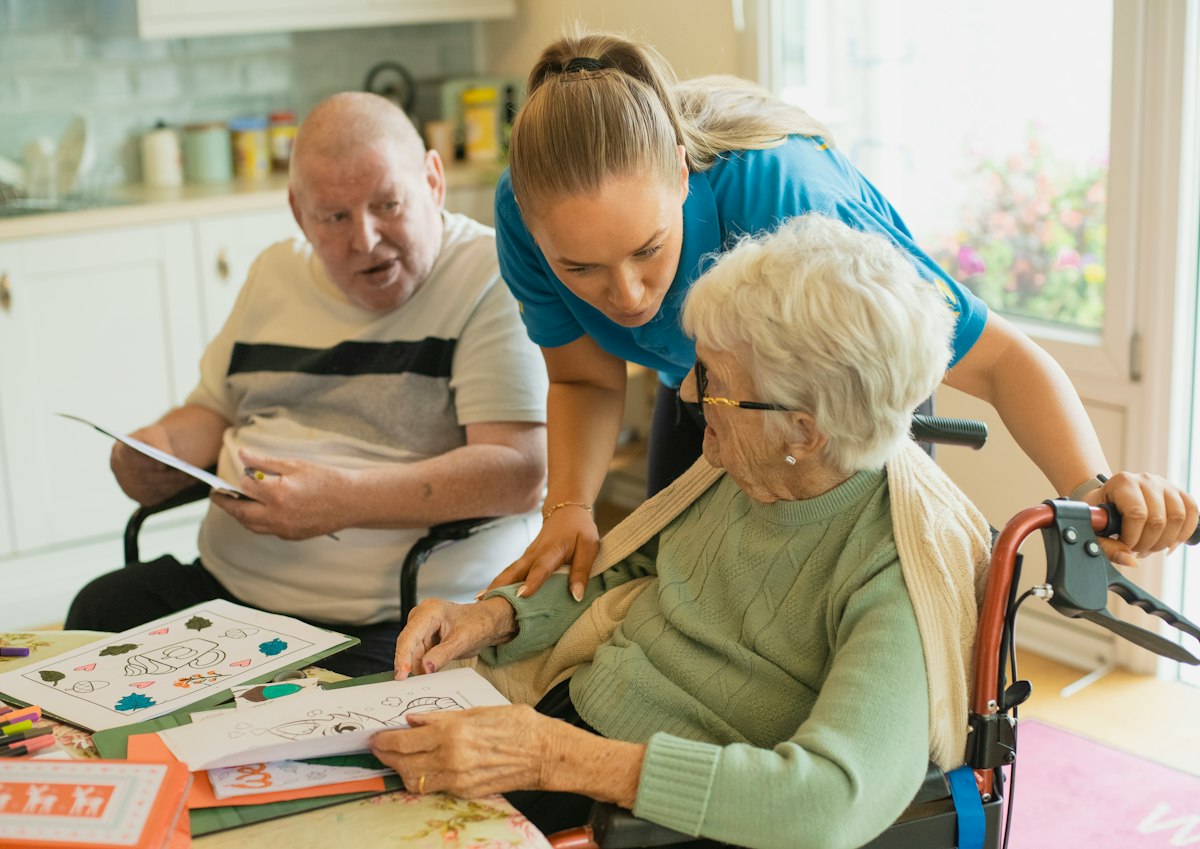
If you are a family caregiver for a parent, spouse, or sibling with Alzheimer's disease or another form of dementia in Saginaw County, the weight of that role is real — and it is nearly invisible to everyone around you. The medical appointments, the overnight checks, the steady erosion of the person you knew, the physical toll of hands-on care, the professional obligations you have quietly let slide. Respite care is the term for a structured break from that weight. It is not abandonment. It is how caregivers survive long enough to keep providing care at all.
The Caregiving Burden in Saginaw County
Saginaw County has one of the highest Alzheimer's prevalence rates in Michigan. According to research from Rush Medical College, 12.1% of adults over 65 in Saginaw County are estimated to have Alzheimer's disease — above the Michigan statewide average of 11.2%. That concentration means families in this region carry a disproportionate share of the state's dementia caregiving burden.
Statewide, the numbers illustrate the scale. The Alzheimer's Association Michigan Great Lakes Chapter reports that 422,000 Michigan caregivers provide 682 million hours of unpaid care annually to loved ones with Alzheimer's. The hidden cost of that care — in sleep lost, careers disrupted, health sacrificed — is enormous. Respite care is one of the few tools that directly addresses it.
What Respite Care Actually Means
Respite care is short-term care provided by someone other than the primary family caregiver. It can take a few different forms: adult day programs, in-home respite workers, or short-term residential stays at a licensed care facility. For families whose loved one has significant care needs — someone who requires help with bathing, meals, medication management, or who cannot be safely left alone — a short-term residential stay is often the most practical option, because it means the family caregiver can actually step away, sleep through the night, travel, or recover without worrying.
A short-term residential respite stay is not the same as permanent placement. It is a temporary arrangement, sometimes as short as a few days and sometimes as long as several weeks. The resident stays in a licensed care setting, receives the same personal care and supervision they would in a permanent placement, and returns home when the family caregiver is ready to resume care.
Respite Stays at Pine Haven
Pine Haven Assisted Living, located on N Brennan Road in Hemlock, accepts short-term respite residents into its licensed Adult Foster Care homes. A respite stay at Pine Haven is not a clinical admission to a nursing facility — it is a stay in a small, home-like setting with 18 residents, home-cooked meals served family-style, consistent caregivers, and access to the companion animal program that includes alpacas, llamas, goats, and chickens.
Pine Haven has a Registered Nurse and Licensed Practical Nurses on staff, which is not standard for facilities of its size. That nursing presence means that even during a short stay, clinical oversight of your loved one's health and medications is built in, not just available on call. For families whose loved one has complex or changing care needs, that distinction matters.
One of the most common concerns families raise about respite stays is whether a short-term resident will feel out of place. In a large institutional setting, that concern can be hard to resolve. In a small home with a consistent daily routine and caregivers who quickly learn a new resident's patterns and preferences, most families find that concern resolves faster than they expected.
When to Seriously Consider a Respite Stay
Families often contact us after a crisis — after a caregiver has become ill, been hospitalized, or reached a point of burnout that has affected their ability to provide care safely. It is better to plan a respite stay before reaching that point. Some situations that make a planned stay worth arranging: you have a scheduled medical procedure or recovery period; you need to travel for work or a family commitment; you are experiencing caregiver burnout symptoms — exhaustion, depression, anxiety, physical illness — that are not resolving with modest rest; or you want your loved one to try a residential setting before a permanent placement decision is required.
Caregivers who take structured breaks provide better care over the long run. That is documented and well established. A few weeks of professional care is not a failure — it is a strategy that preserves everyone's wellbeing, including your loved one's.
When a Respite Stay Sometimes Becomes More
Some families arrange a respite stay with no intention of transitioning to permanent residential care, and that stay remains what it was — a short break, a return home. Others find that the stay clarifies what the family needs going forward: that their loved one is thriving in the residential setting, or that the primary caregiver cannot safely resume the same level of care. Pine Haven can accommodate those transitions when they arise — a respite stay does not lock families into any particular path.
Frequently Asked Questions
Does Pine Haven offer respite care?
Yes. Pine Haven accepts short-term respite residents into its licensed Adult Foster Care homes in Hemlock, Michigan. Availability varies, so contacting Pine Haven early — before a planned caregiver absence — gives you the most options. Call (989) 642-5761 or use the contact page to inquire about current availability.
How long can a respite stay last?
Respite stays at Pine Haven typically range from a few days to several weeks. The specific duration is arranged based on caregiver need and facility availability. There is no fixed maximum for a short-term stay — longer stays are possible when the circumstance calls for it.
Will insurance or Medicaid cover respite care?
Pine Haven accepts the Michigan Medicaid Home and Community-Based Services (HCBS) waiver, which may cover some respite services for qualifying residents. Long-term care insurance policies vary — some specifically include respite care coverage, others do not. An elder law attorney or social worker familiar with Michigan's Medicaid waiver programs can help clarify what your family's specific coverage includes.
Is Pine Haven appropriate for someone with Alzheimer's or dementia?
Pine Haven provides care for residents with Alzheimer's disease and other forms of dementia within its Assisted Living service. Its small-home model — consistent caregivers, familiar environment, structured daily routine, and animal interaction — suits many residents in mild-to-moderate stages of cognitive decline. Families with a loved one in more advanced stages or with significant behavioral challenges should discuss their specific situation with Pine Haven's care team to assess fit.
How do I arrange a respite stay at Pine Haven?
Call Pine Haven directly at (989) 642-5761 or reach out through the contact page. Pine Haven will discuss the level of care your loved one needs, confirm availability, and walk through the intake process. Starting that conversation before you need the stay — rather than during a crisis — gives you the most options.
This article is provided for informational purposes only. It does not constitute medical advice, legal advice, or financial guidance. Families evaluating respite or residential care options should consult with their loved one's physicians, a licensed social worker, and, where relevant, an elder law attorney familiar with Michigan's Medicaid waiver programs and Adult Foster Care licensing.